Home > News & Stories > Meet the 2026 Fellows: Yaminee Patel
News & Stories
Meet the 2026 Fellows: Yaminee Patel
Published: May 19, 2026
Categories: Artist Interviews
About Artist Trust Fellowships
Artist Trust Fellowships are merit-based awards of $10,000 providing unrestricted support to practicing professional artists of exceptional talent and ability residing in Washington State. The first Artist Trust Fellowship Awards were selected in 1987, making it our longest-running award program. In 2026, $160,000 was awarded to 16 artists across five Washington State counties.
Our Meet the Fellows series highlights each of the award winners in a series of interviews and social media highlights. To support grants programs like the Artist Trust Fellowships, visit artisttrust.org/donate
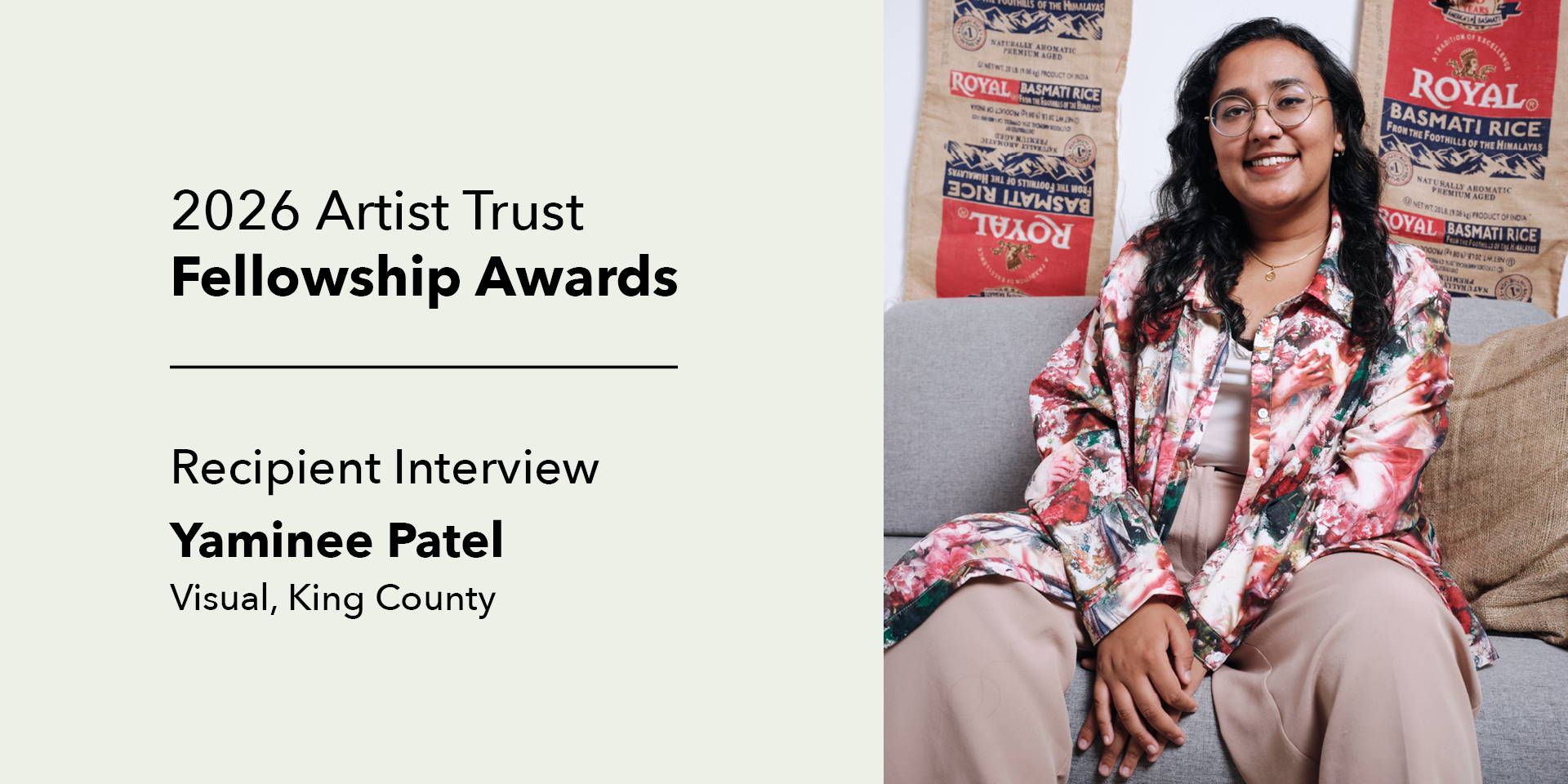
Interview with 2026 Fellowship Award Recipient Yaminee Patel
Yaminee Patel’s first solo exhibition, Rice, Root, and the Road to Cultural Exploration is on view at Common Objects in Seattle, WA, May 8 – 29, 2026.
Please introduce yourself and share a little about yourself, your background, and what draws you to your work as a visual artist.
Hello! I’m Yaminee (Yam) Patel! I’m a Seattle-based mixed media artist and I explore themes of cultural identity, food, and community. I’m inspired by my Indian heritage and utilize natural materials like rice, lentils, and chickpeas to create intricate, textured pieces that evoke comfort, warmth, and nostalgia. I am driven to create intricate 2D and 3D works that draw historical farming practices and traditional ceremonies. I am mesmerized by textures and calming, natural tones which I’m using to show a very different side to Indian culture than the common depictions of loud, colorful expressions.
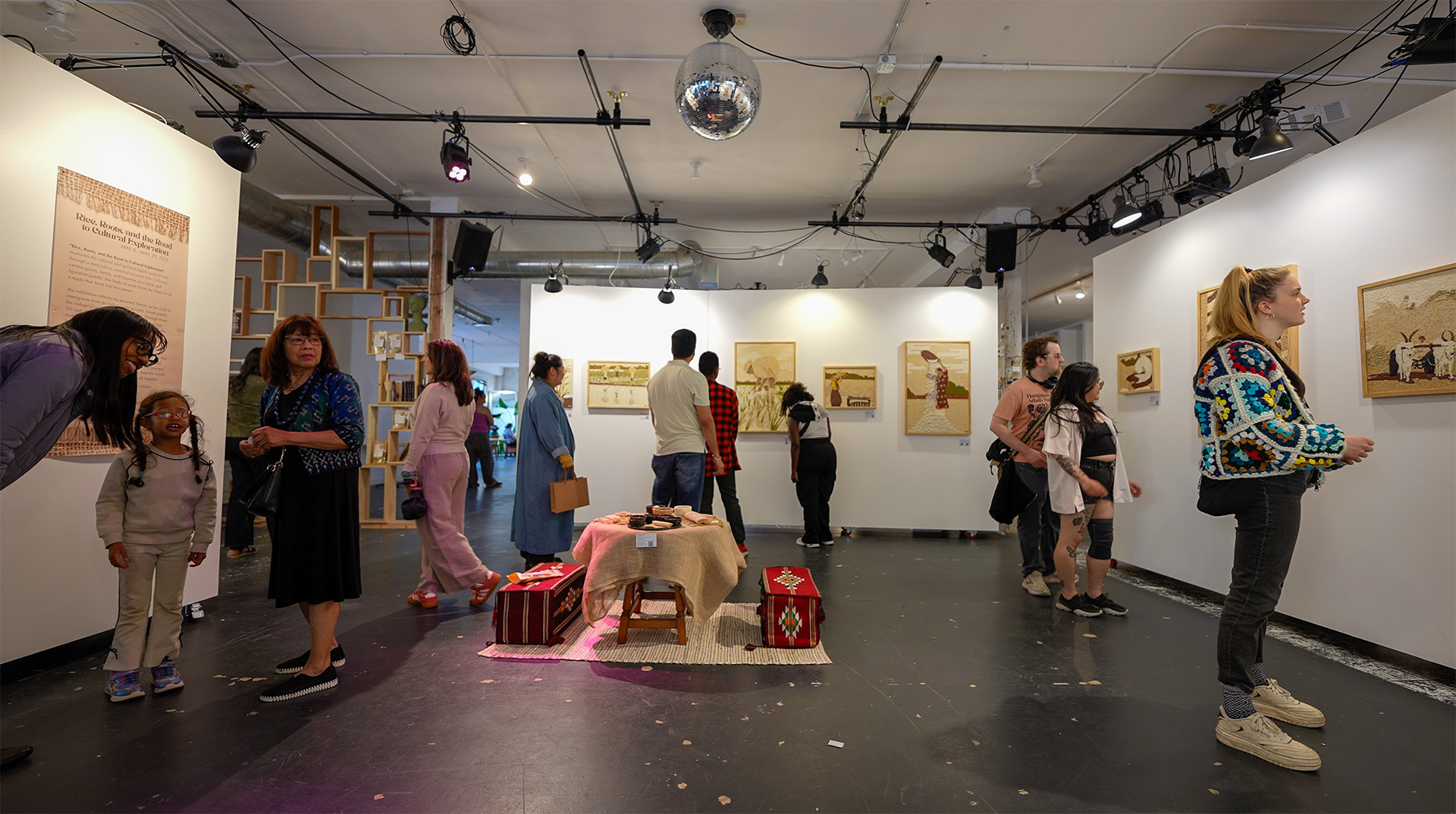 Yaminee Patel, Rice, Root, and the Road to Cultural Exploration, Common Objects, Seattle, WA. Installation photo: Films About Artists
Your craft is deeply creative, requires a great deal of precision and patience, and is unique in how it crosses cultures and lived experiences. How has your journey into the world of grain art helped you connect with your own diasporic identity? What is your creation process from idea to final piece?
As a child, I never felt quite connected to my culture. I was overwhelmed by the patriarchal overtones, loud celebrations, and oppressive cultural explorations. For years, I constantly searched for my “in.” I wanted something I could see myself in and felt naturally drawn to explore. Rice has provided an interesting thread for me to pull on to learn about my family’s history. In India, my family members are still farmers and I love visiting their farm every time I go back. I have used my rice exploration to connect with my family, often calling my parents, aunts, and uncles to learn more about traditions I read about in my research. I have focused my work on documenting my research and conversations I have with my family and it has brought me a sense of gratitude and peace.
For 2D pieces, my process starts with a deep dive on certain practices, either within farming, traditional ceremony, or food. I then create a digital sketch of what I want to create and color block ideas for where to place different materials to ensure I have adequate contrast in the piece. I use a projector to draw the outline of what I am trying to create, ensuring that the composition is centered. From there, I begin filling in sections, placing lines of Elmers glue, dipping the end of a chopstick into the glue, and then using that to pick up and place each grain of rice. And then I repeat the process for hours, taking small breaks to stretch my wrists. The process is painfully repetitive but I find it quite meditative. For 3D pieces, I work like a 3D printer, starting with a layer of glue in a piece of firm plastic. I lay down a coiled layer of rice and then add a cross hatched layer on top of that to secure the bowls foundation. From there, I stack layers of rice around the perimeter, around and around the bowl until I get to my desired height. The process required patience and drying between layers to prevent unevenness.
Art is constantly changing and developing. How has your work developed over the last few years?
Before working in crop art, I was a bit of a miscellaneous artist. I used be very painting and mixed media focused and my work lacked a central through line. Rice unlocked my ability to explore a range of mediums, but through the lens of crop art which helped develop a more focused exploration. I began my practice with 2D work, starting small (6”x6”) and increasing scale up to 24”x36”. To further test the material’s strength and durability, I shifted to 3D forms, pushing limits by making a true-to-size rice cooker and a sculpture of a traditional banana leaf meal. I even dipped my toe into poetry and wrote my first piece out of rice.
Beyond using literal rice, I picked up skills in sewing! I started a community project collecting empty rice bags from local restaurants and friends to sew recycled materials. I’ve made a cultural rice quilt and a rice sari, and I’m working on overalls. I don’t think I would have picked this skill back up if I wasn’t so focused on telling the story of rice.
I remain eager to explore the medium further with future projects like light sculptures using small pieces to create unique shadow patterns depicting farming ritual, and performance art created by recording a video of me making an edible piece from rice paper, glue, and rice.
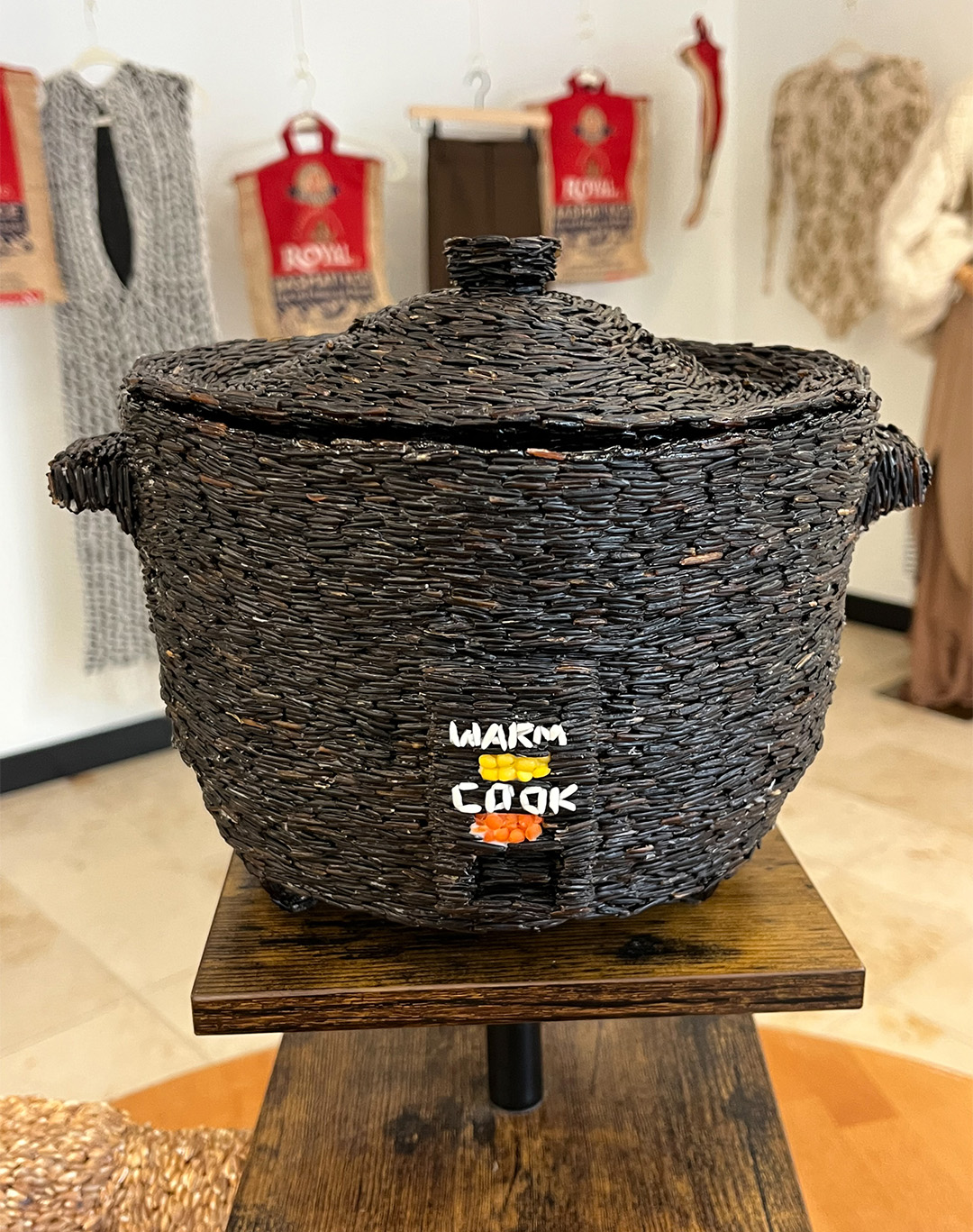 Rice Cooker, rice and lentils, 6″ x 11″ x9″, 2025
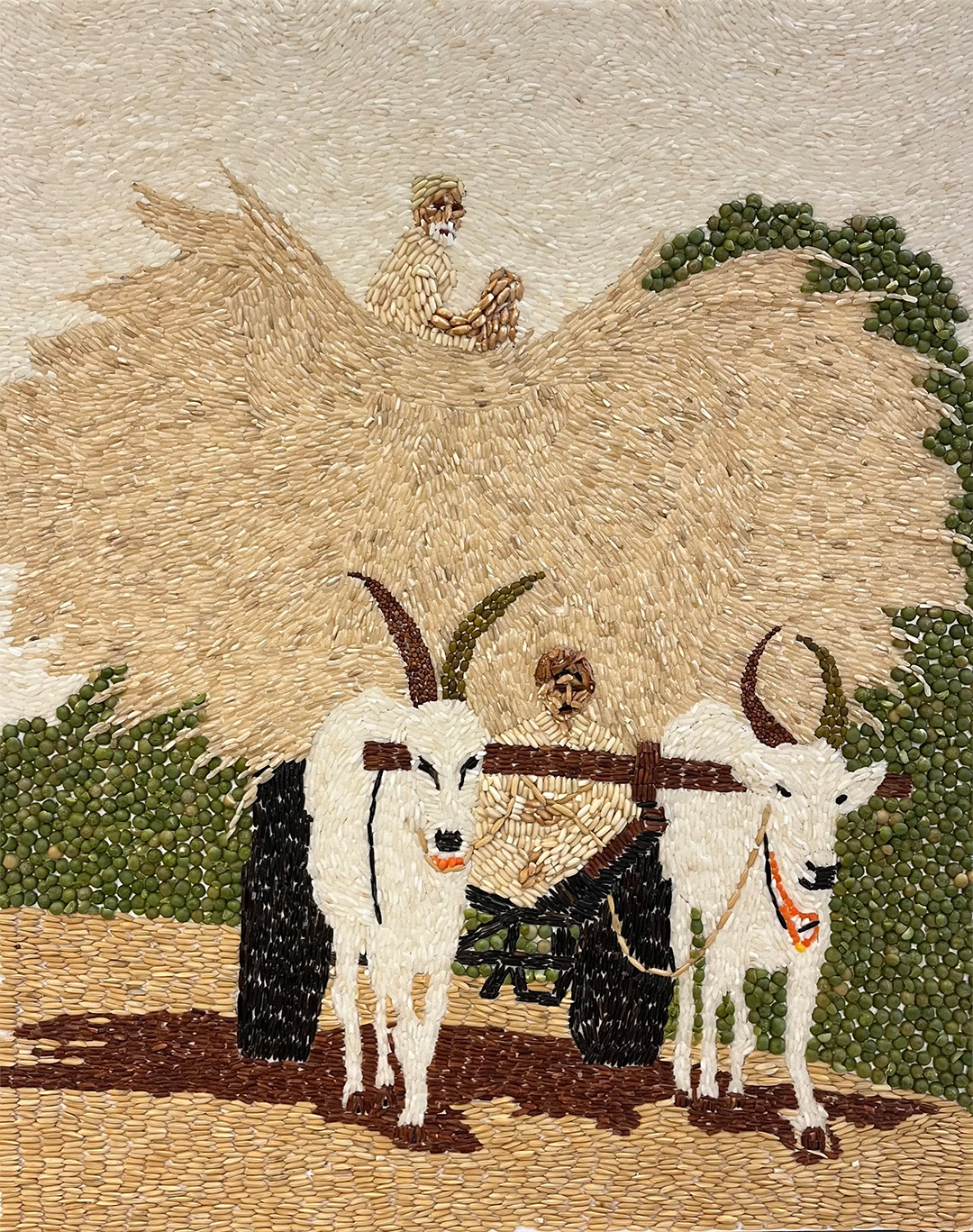 Bullock Cart, rice and lentils, 16″ x 20″, 2025
What keeps your creative practice moving forward? Why do you create?
I feel very lucky to be able to create without the burden of supporting my entire life off of my artwork which is a huge privilege and allows me to make work purely for myself. I look at my art practice as a safe, nonjudgmental way to explore my relationship with my Indian heritage. I am moved by the idea of exploration on my own terms and allowing myself to dive into the aspects of my background that call to me. Most of my work feels like a live journal of pieces of myself that I am learning more about through my family; my dad’s childhood stories from a summer he spend at his family farm, my mom’s savvy sewing skills and her love to dress others in saris, my grandmother’s love for cooking from sunrise to sunset, the list goes on. I have used a variety of mediums to explore these topics, from 2D to 3D works, abstract and wearable textile mediums, and poetry. Much of my current body of work is also explored through the lens of rice as the anchor point, but the medium has allowed me to stretch beyond a single “type” of art in a way that I don’t think I would have found if I stuck with painting as my medium. I am excited to continue learning more and sharing art that connects me to people who have had similar lived experiences.
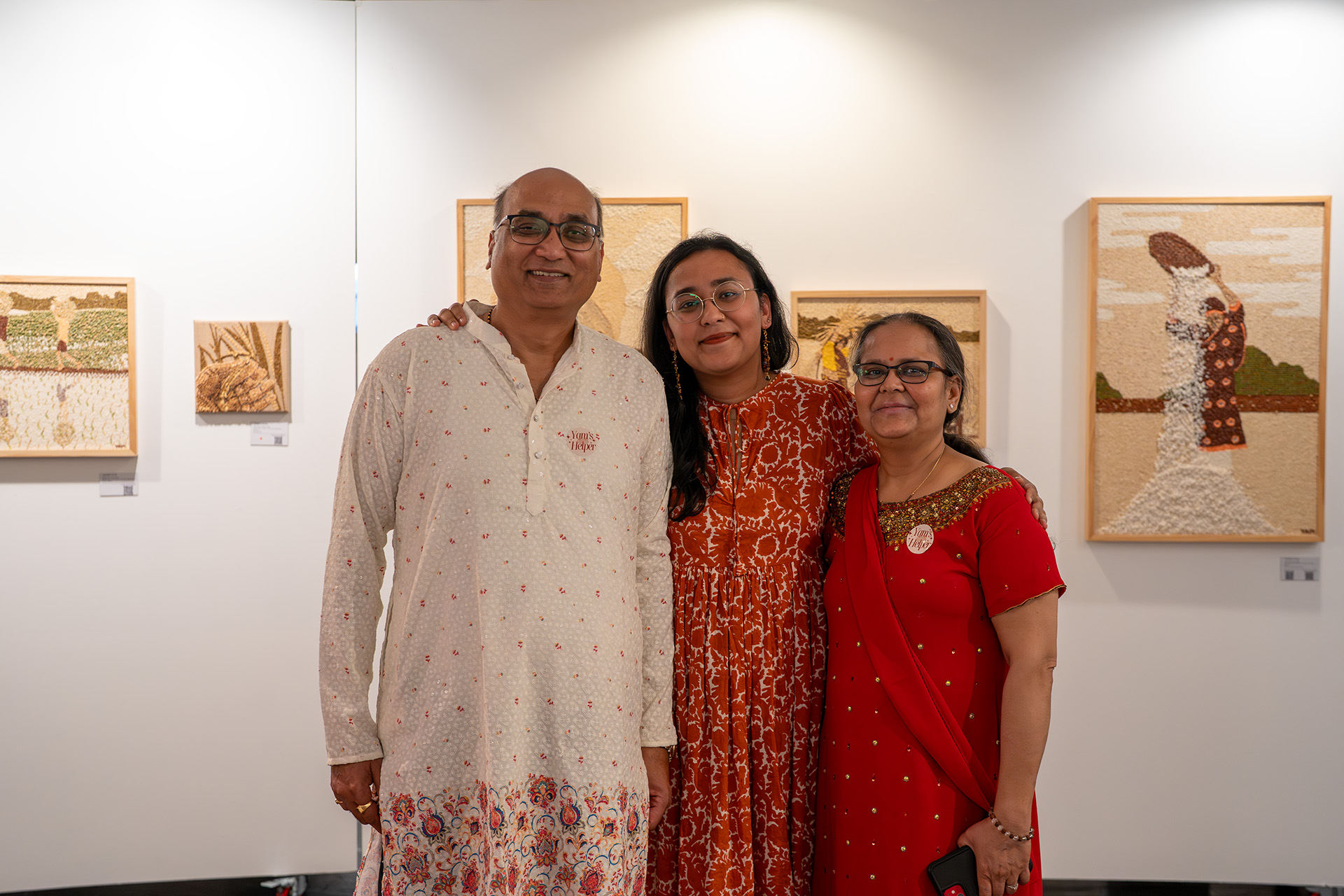
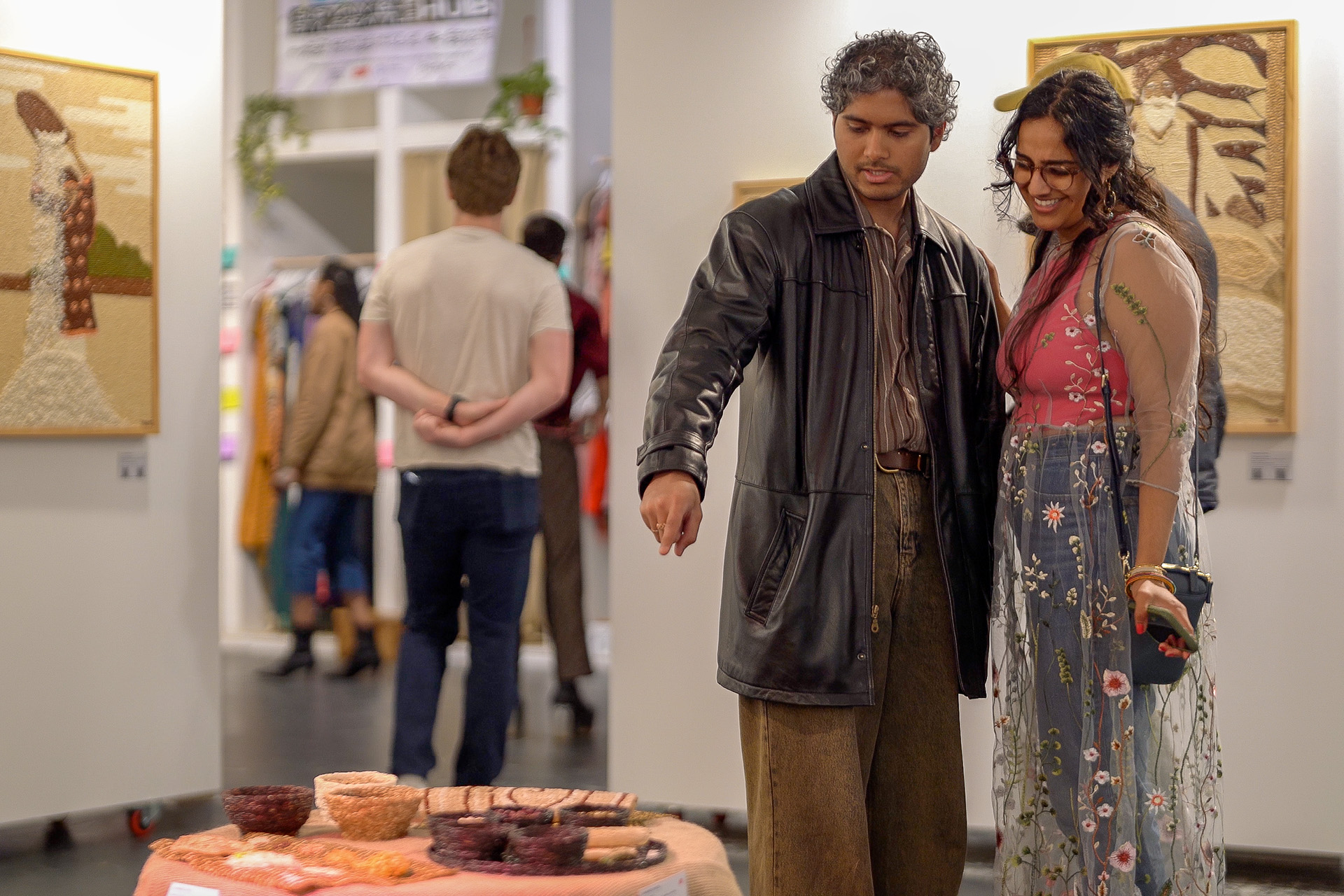
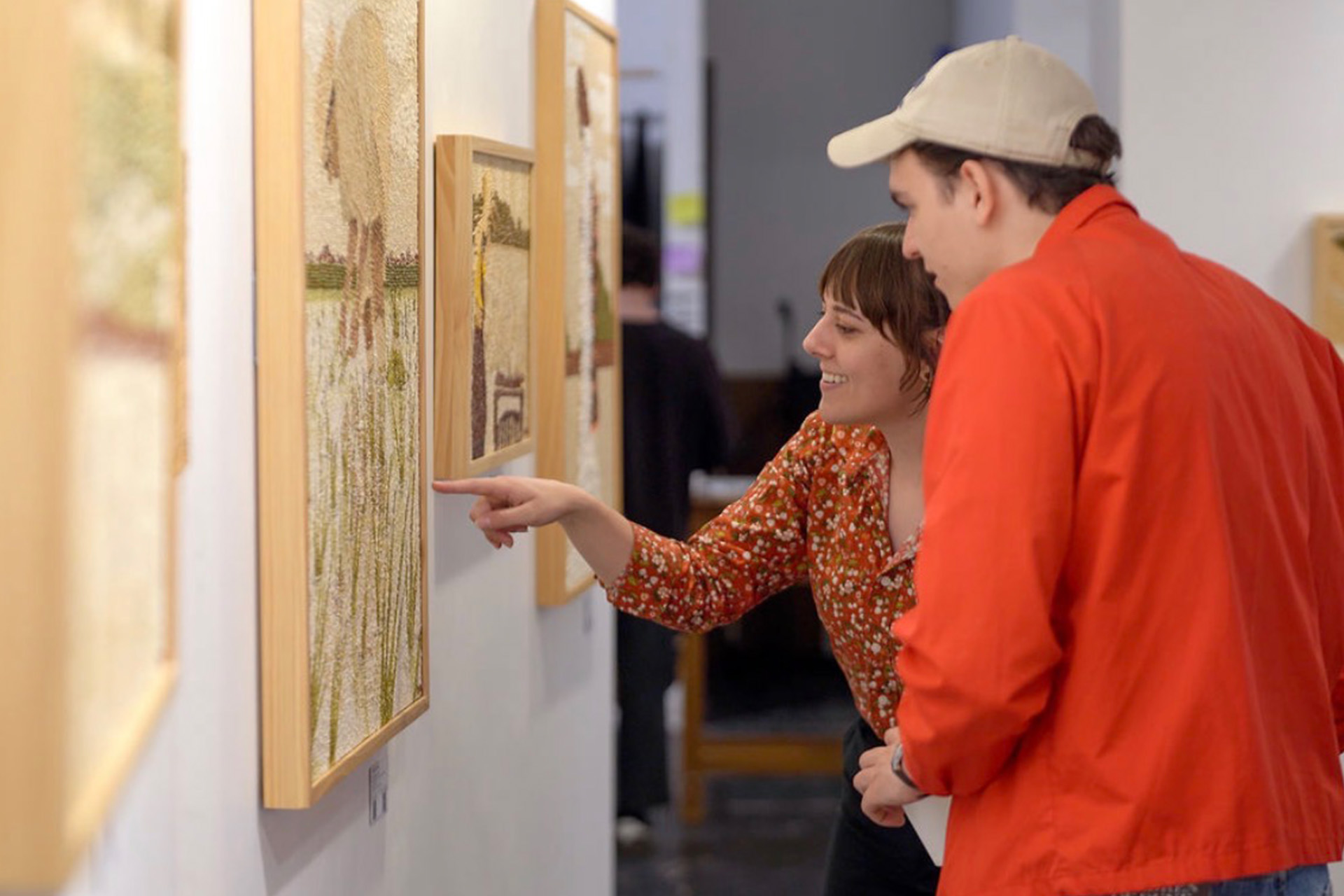
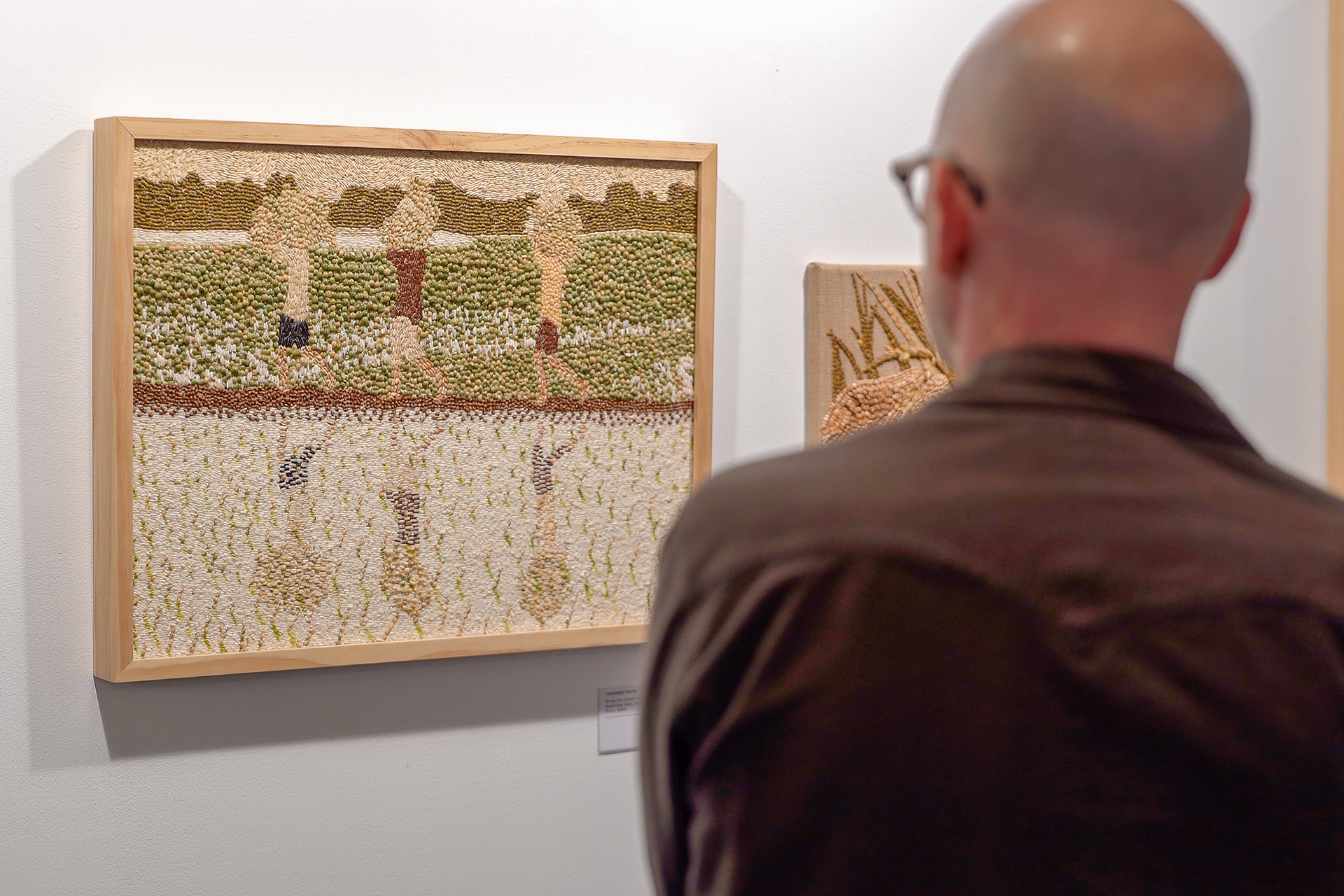
Yaminee Patel, Rice, Root, and the Road to Cultural Exploration, Common Objects, Seattle, WA. Installation photos: Films About Artists
As a 2026 Fellowship Award Recipient, how has this award impacted you?
The 2026 Fellowship Award is the largest honor I have reached in my art career thus far! It has given me a sense of validation in my work and tells me that what I am creating resonates deeply with others. I hope to use this award to fund future projects that I have been working on including a South Asian diaspora group show and a video essay project on my experience growing up in a motel, a common experience for many South Asian 2nd generation children.
How can Artist Trust continue to support artists across Washington State?
Lobby the state government to continue pushing for more affordable cities! Art belongs everywhere but not every place is artist friendly. Distributing funds is a huge help but our long-term vision has to be beyond the awards and more focused on the world we wish to imagine for ourselves as artists.
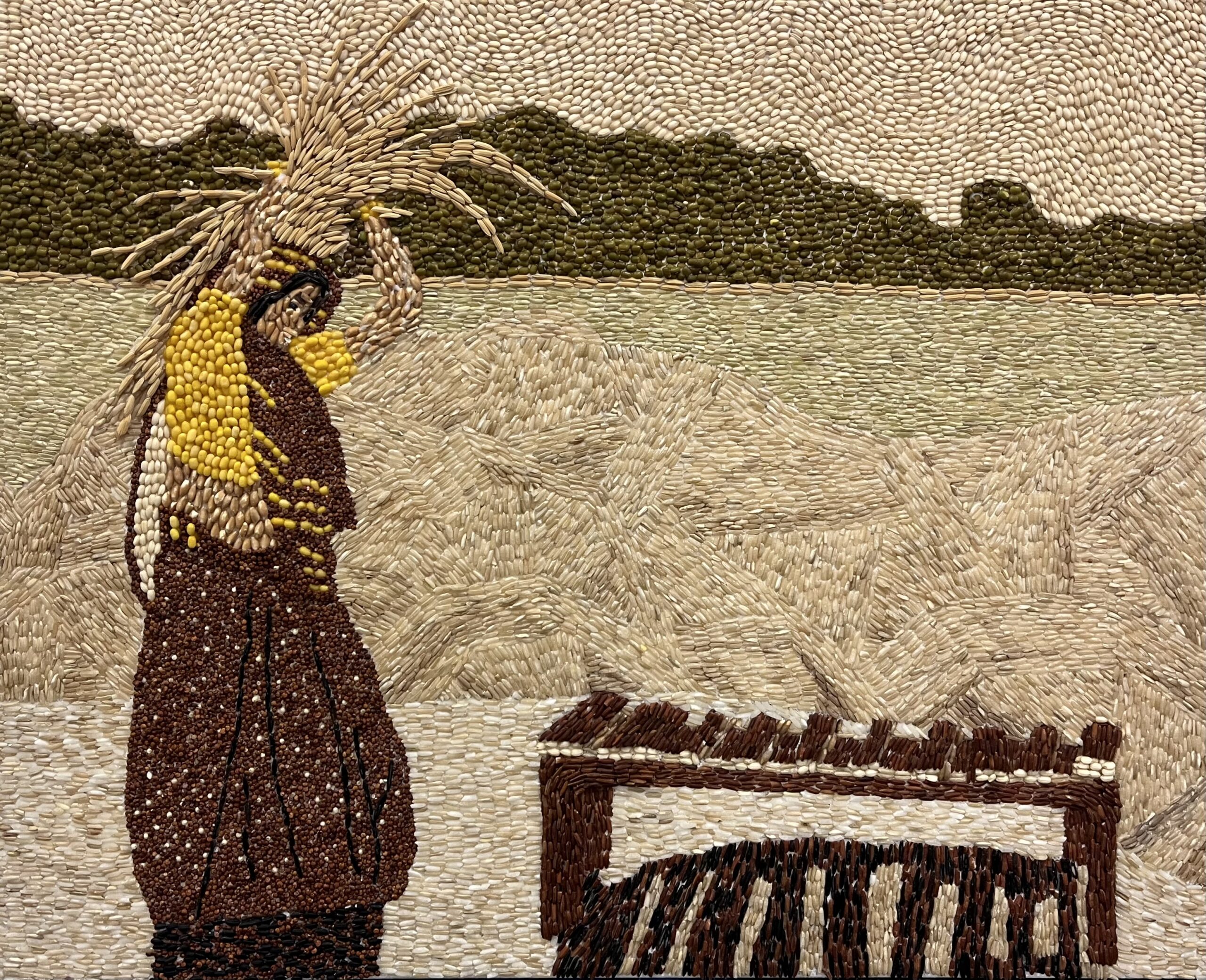 Thresh the Stalks, rice and lentils, 20″ x 16″, 2025
2026 Meet The FellowsArtist Trust Fellowship AwardsInterviewYaminee Patel
Related Stories
Support Artists
We work hard serving thousands of individual artists across Washington State each year, but we can’t do it without you! Learn how you can support artists year-round.
Image: Peggy Piacenza, 2024 Fellowship Recipient