Home > News & Stories > Meet the 2026 Fellows: Cris Romento
News & Stories
Meet the 2026 Fellows: Cris Romento
Published: October 9, 2026
Categories: Artist Interviews
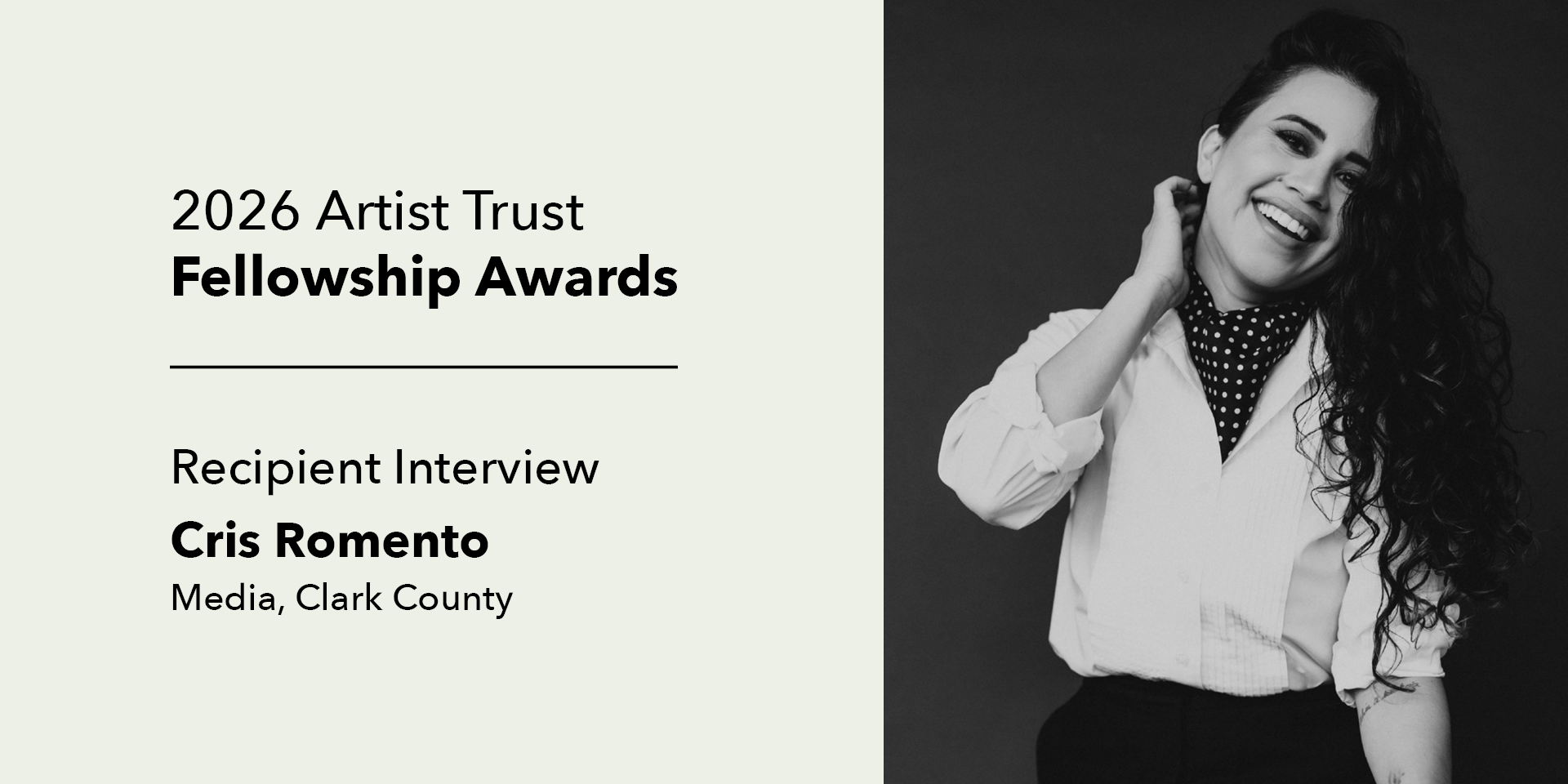
About Artist Trust Fellowships
Artist Trust Fellowships are merit-based awards of $10,000 providing unrestricted support to practicing professional artists of exceptional talent and ability residing in Washington State. The first Artist Trust Fellowship Awards were selected in 1987, making it our longest-running award program. In 2026, $160,000 was awarded to 16 artists across five Washington State counties.
Our Meet the Fellows series highlights each of the award winners in a series of interviews and social media highlights. To support grants programs like the Artist Trust Fellowships, visit artisttrust.org/donate
Interview with 2026 Fellowship Award Recipient Cris Romento
Please introduce yourself and share a little about yourself, your background, and what draws you to your work as a filmmaker.
Aloha, my name is Cris Romento and I’m a Hawaiian-Mexican filmmaker. My work centers healing through storytelling. I create visual narratives that uplift indigenous joy and resilience.
I grew up in the white suburbs of Vancouver, Washington, after my ʻohana (family) left Hawaiʻi in the 1990s. I was severed from a deeper understanding of Hawaiian values and the wisdom of aloha ʻāina (love of land) so integral to our lifeways. I didn’t know this was defined as a diaspora, and it was a collective pain felt by our people. Once I understood the term, it felt like a light at the end of the tunnel, giving shape to something I had struggled to name.
It set me on a path to create my short documentary, DEAR ALOHA, the first film to examine the displacement of Native Hawaiians. It was shared through gatherings guided by Pacific Islander therapists and held in Native spaces, such as the Duwamish Longhouse in Seattle. Creating safe spaces for our people carrying unspoken grief is central to my work.
To the outside world, Hawaiʻi is vacation in paradise. For Native Hawaiians, it is a place where we continue to live with the repercussions of colonization, embedded in systems that have forced our families to leave and made it nearly impossible to survive financially. More kānaka (Native Hawaiians) live away from Hawaiʻi than on the islands, and that number is rapidly increasing. Our deep shame of leaving, of not feeling connected to our identity, has ripped us from our inherent ties to our land and culture. Washington State has the second largest diaspora population, so it feels good to be part of the work happening here. This is what my films explore and where my focus is: our authentic voice as contemporary Hawaiians, and the ways I can bridge those stories into experiences where we can heal together.
 Cris Romento, Dear Aloha, short documentary, 2025, Shaneika Aguilar
Your work explores a shared diasporic experience of fragmentation and connection with tenderness and intimacy, while your next film seems to shift toward joy. How has collaborating closely with your father shaped your relationship to your own diasporic identity?
I once heard another kanaka at a film screening say, “acknowledgement is medicine.”
I learned what the phrase “Hawaiian diaspora” meant through making this film, and while it’s beginning to enter our collective cultural consciousness, for many, seeing this film may be their first time hearing the term. Especially for our older generations.
In Dear Aloha, I ask my dad about leaving home for the first time. I’ve never had those kinds of conversations with him. When my father opened up on camera, I was so shocked. I didn’t know I’d be sharing my family’s story. I didn’t want to even be on camera! But mentors, my fellowships, my naʻau (intuition) led me to understanding that as awkward as it might be, this was the only way to make it. When I began screening the film, people came up to me and told me that my father was their father. It was such an earth-shattering compliment to receive. I was terrified of making this film. I had no idea if anyone would understand my story. It shows how transcendent our belonging experience can be.
My dad’s generation isn’t one that talks about feelings, or was encouraged by their parents to express them. He recently told me that his friend from Hawaiʻi found my film online and cried while watching it. It was such a profound thing for me to hear. That this generation of kāne (men) are also resonating with the story. These messages have helped me start to release this thought that I am not Hawaiian enough, and be proud of who I am. That’s a big thing diasporic Hawaiians go through. Our detachment from home is so severe, and we can feel deep pain that we never confront. Our souls, our identity, are tied to our land. Our spirits are always there, and it physically and emotionally hurts to be denied and removed from our indigeneity.
In the diaspora, joy is our lifeline. It’s our resilience. It’s our relationship to aloha. Hawaiian joy is such a big part of my memories, and so sharing it just feels like a natural thing. But I had to make DEAR ALOHA – I had to go through that film.
I grew up around a lot of uncles and aunties in Washington State who would stay up laughing and playing music until sunrise at our potlucks. We would joke around so much, and the sounds of their laughter are in my DNA. Hawaiians are so funny! I just want to show our vibrancy in a real way. Because there is also joy in relatability. I want us to laugh and cry together.
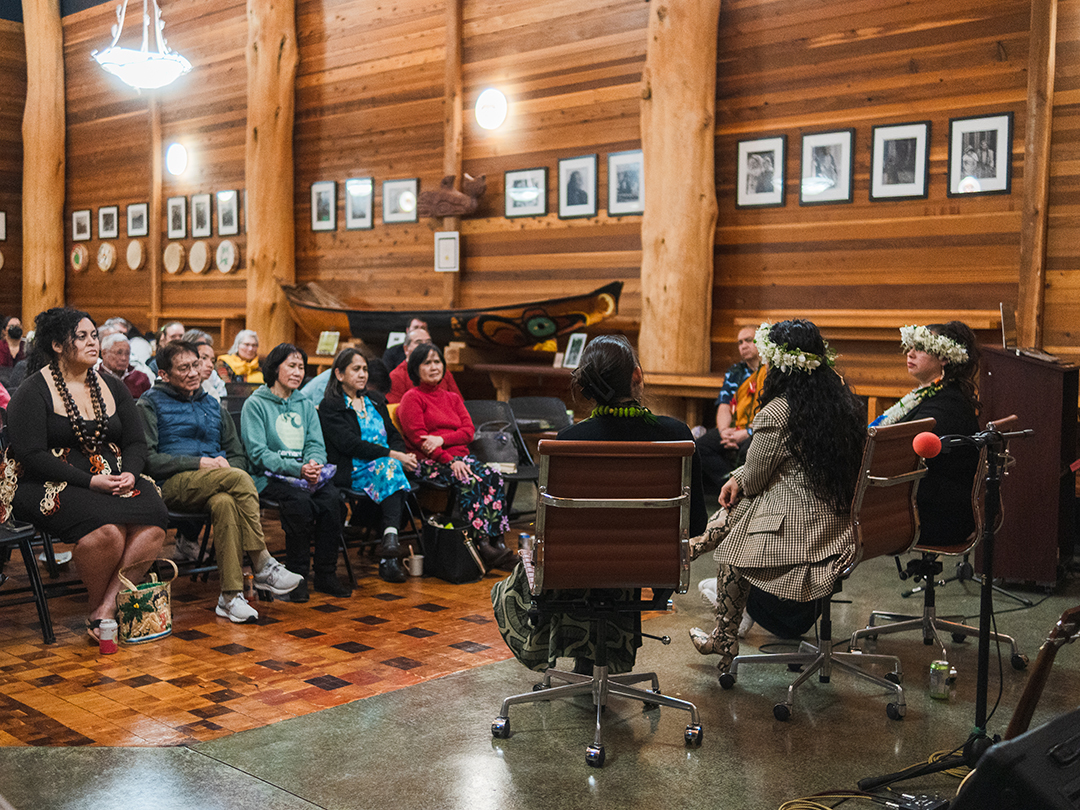 Dear Aloha film screening, 2025. Photo: Patty Tang
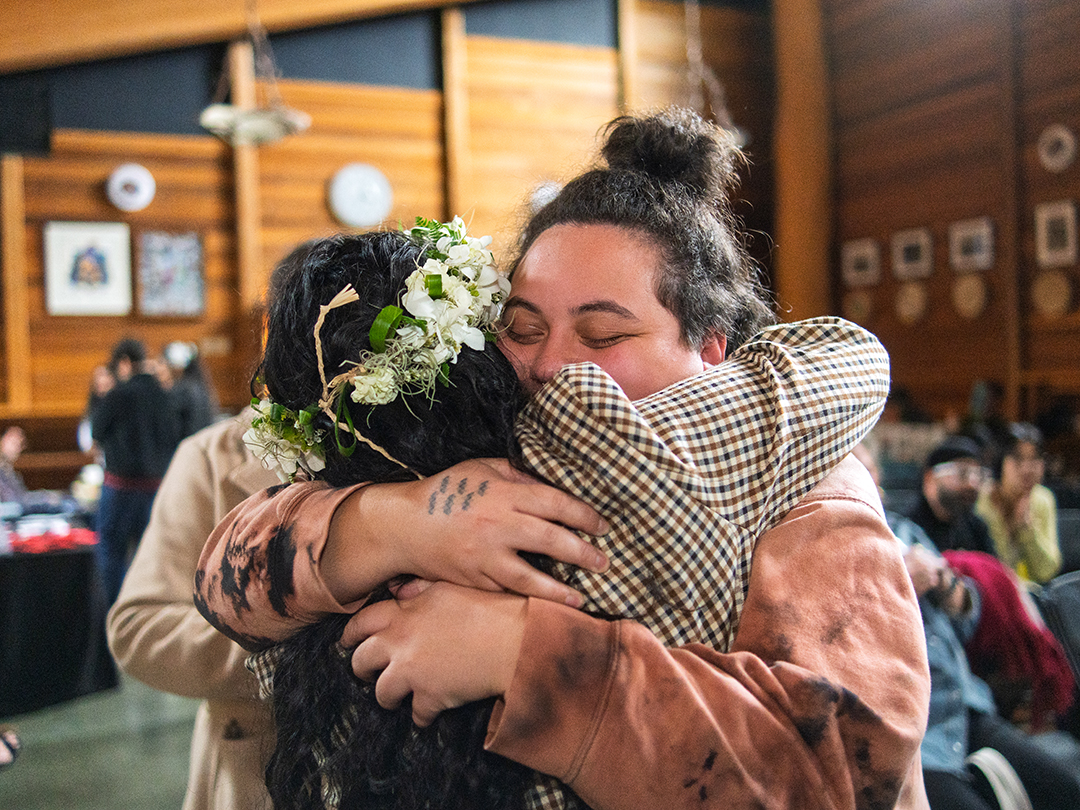 Dear Aloha film screening, 2025. Photo: Patty Tang
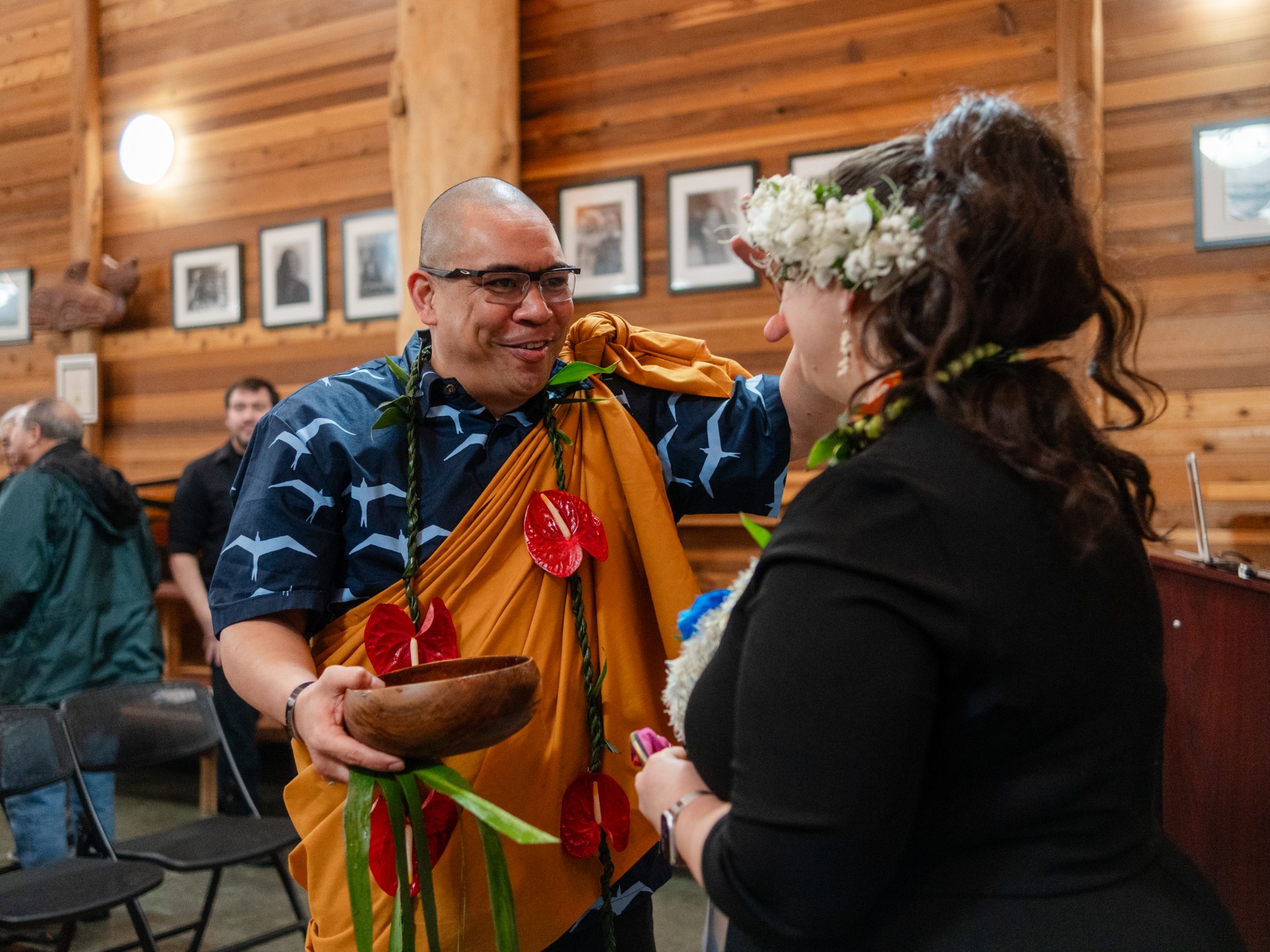 Dear Aloha film screening, 2025. Photo: Patty Tang
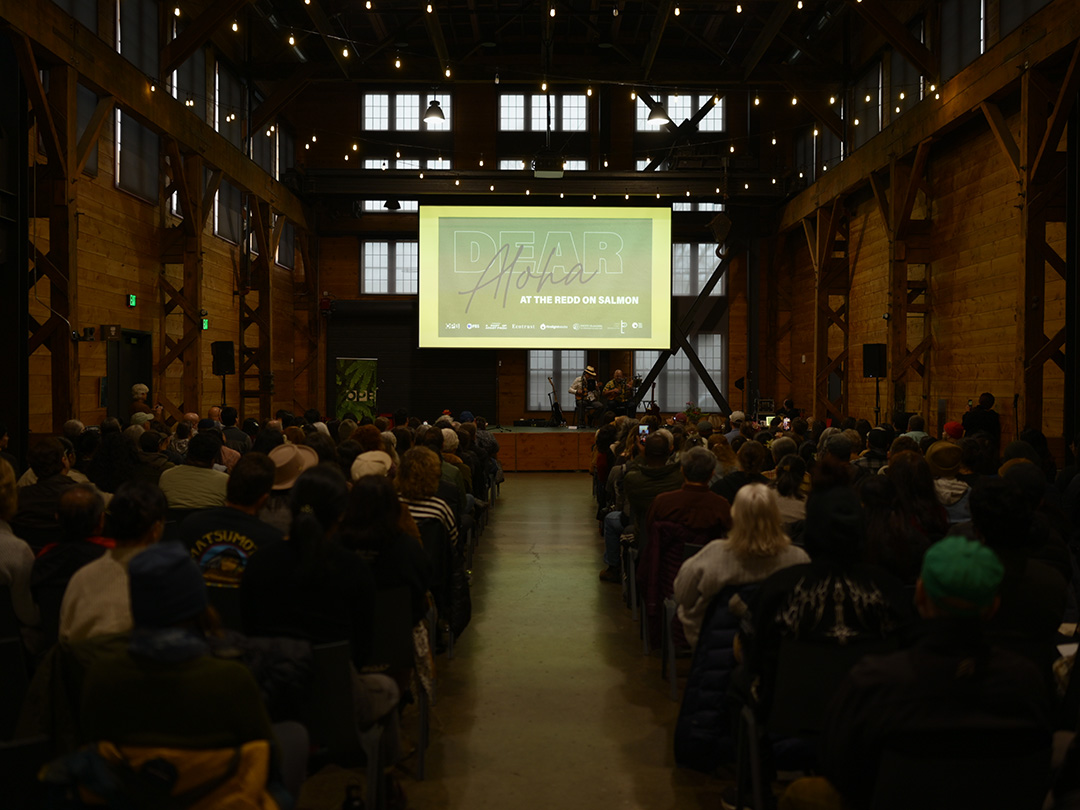 Dear Aloha film screening, 2025. Photo: Todd Gee
Art is constantly changing and developing. How has your work developed over the last few years?
I cannot imagine any filmmaker going through the intensity of making a film and not coming out a changed person. My own relationship to myself has transformed. Three years ago, I did not have the words or depth of understanding about my kūpuna (ancestors), my moʻokūʻauhau (lineage), my kuleana (responsibility) that I do now. And I’m never going to be finished learning.
Ritual has become a big part of my life. I pule (pray), I try to memorize oli (chants) and not go a week without speaking ʻōlelo. I didn’t grow up learning these things, but I still wake up and try. I try to remember essence over form in my cultural practices. It’s coming from a place in my heart that feels connected to my kūpuna, so it doesnʻt have to be perfect. It is Hawaiian because it is an extension of me, not because it’s flawless.
So, I think giving myself that space and grace in my own identity and connection to my kanaka practices has helped my art tremendously. It has helped me find a space for diaspora joy in Hawaiian storytelling.
What keeps your creative practice moving forward? Why do you create?
Mostly because I’m curious! Ever since I was a kid, I was always asking people a lot of questions.
I am still obsessed with hearing people’s stories. I’m not a “hi, how are you” kind of person, but more of a “what deep experience do you want to tell me about?” conversation person. So that innate need to know and understand people’s center, and desire to feel hope, along with the cacophony of other emotions we feel before we get to hope, really keeps me up at night.
In the Yucatán, there are these cavernous sinkholes called cenotes which can go hundreds of feet deep and were considered sacred by the ancient Maya.
I call my emotions a cenote, because there is also a sacred depth to storytelling. I’m always willing to go as far as I can.
Stories at their best give me hope. And there is no better feeling than watching people feel a wave of emotions at all the parts of a film that also made you have the same experiences while editing it. It’s what gets me through the isolation of making a documentary.
 Cris Romento, Dear Aloha, short documentary, 2025, Shaneika Aguilar
As a 2026 Fellowship Award Recipient, how has this award impacted you?
I’ve been working on my next film, which is about my father’s journey to reconnect with hula 40 years after giving it up. Because of the Artist Trust funding, I was able to start production. It came at a crucial time, allowing me to document him as he prepared for a once-in-a-lifetime event in which he and his hālau (hula group) performed in honor of his Kumu (hula teacher). I cannot begin to describe what that meant to me, watching my father perform onstage, and seeing his happiness come back after decades of refusing to dance.
Filmmaking has been rough this last year. Budget cuts have led to the loss of critical funding opportunities, from the National Endowment for the Humanities as well as the defunding of public media, which is the largest supporter of documentary filmmaking. If I didn’t get the Fellowship, this film would not have happened.
How can Artist Trust continue to support artists across Washington State?
Artist Trust’s support is something you can really feel, from the people who work there to the kinds of artists they uplift. It’s such an honor to receive a fellowship from an organization I am such a fan of!
With many grants cut this year, it can be discouraging as a Pacific Islander to not see our stories reaching AAPI spaces and beyond. I think one of the biggest struggles as a Native artist is the pressure to frame indigenous stories in ways that feel familiar to institutions rather than authentic to our lived experiences. Sharing work rooted in intergenerational trauma carries immense emotional labor. That’s why unrestricted funding like the Artist Trust Fellowship Award is so meaningful. It gives artists the freedom to create on their own terms, without having to reshape their work to fit external expectations. That kind of trust is a profound form of support, allowing artists to focus on the work itself and the communities it serves.
Artist Trust plays such an important role in championing Native artists across Washington State, and we’re incredibly lucky to have them here.
Watch DEAR ALOHA here:
2026 Meet The FellowsArtist Trust Fellowship AwardsCris RomentoInterview
Related Stories
Support Artists
We work hard serving thousands of individual artists across Washington State each year, but we can’t do it without you! Learn how you can support artists year-round.
Image: Peggy Piacenza, 2024 Fellowship Recipient